Why a Shared Table Changes the Shape of a Conversation
Why a shared table changes the shape of a conversation: see how its position, size and clear space can help a small gathering feel easier to join.
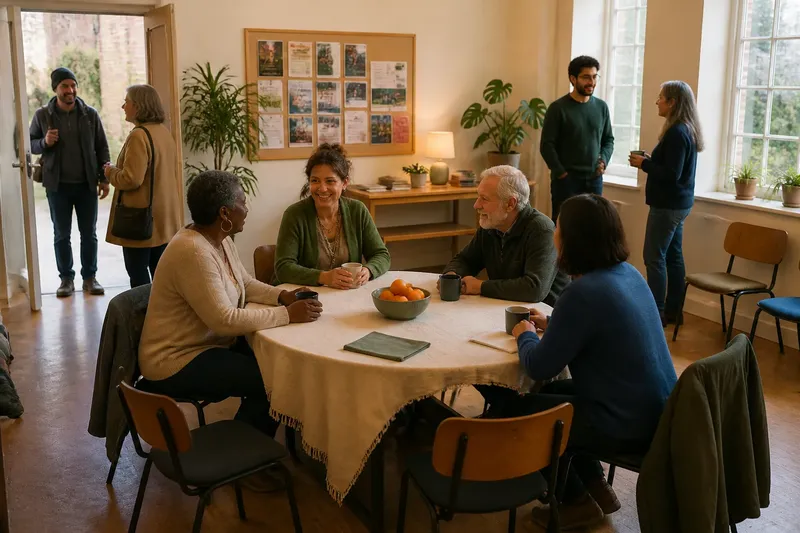
At the community room, two neighbours arrive early and choose chairs along the wall while the host lays out a cloth and a bowl of clementines. This imagined gathering shows why a shared table changes the shape of a conversation: it gives people something to gather around without deciding who must speak first.
The table is not a magic ingredient. Its effect depends on where it stands, what occupies it and whether people can approach from more than one side. In this invented situation, we can follow those choices from the first arrivals to the point when the conversation begins to travel through the room.
What is the table doing before anyone speaks?
A focal point is simply something that helps people orient themselves. In a room with no obvious centre, guests may look to the host, the door or the person who already knows someone. A table offers another place for the eyes and hands to rest. People can set down a mug, notice the fruit or help arrange napkins before they are ready to introduce themselves.
For this gathering, imagine that Mara, a volunteer host, is welcoming a handful of residents to talk about what makes the shared courtyard pleasant to use. She puts a modest table near the middle of the community room, with chairs around it but not packed tightly together. The arrangement provides a common reference without making the gathering resemble a meeting with a speaker at the front.
That distinction matters. A table set up like a panel can quietly assign roles: one person leads, everyone else faces them. A table approached from several directions suggests that attention can move. The host can still open the conversation, but she is not the only person with a visible place in it.
Why leave room around it?
Clear space is part of the arrangement, not leftover space to fill. If the table is wedged between a wall and a stack of chairs, people may have to squeeze past one another to join. If every surface is covered, there is nowhere to put a coat or cup, and the table can feel more like a display than a shared resource.
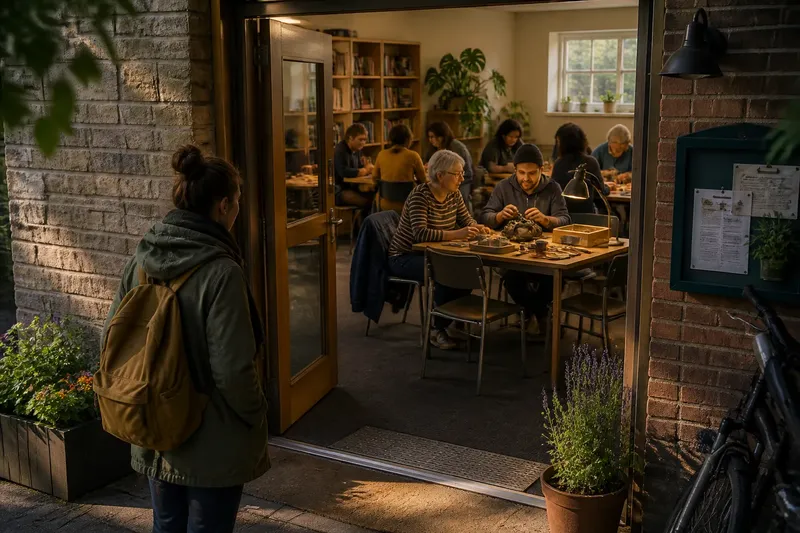
Mara leaves a walkway from the door and keeps one side of the table open. A person who arrives late can approach without crossing between two people already talking. Someone who prefers to stand can pause at the edge, listen, and decide whether to take a seat. The open side also gives the host a way to move around rather than remain fixed in one position.
Space around the table helps conversation move as well. A person can turn towards a new speaker, shift a chair slightly, or step aside to make room for another arrival. Those small adjustments are easier when the furniture does not force everyone into a single tight ring.
How does the gathering change as people arrive?
At first, the early neighbours talk mainly to Mara. One asks where to leave a coat; another comments on the fruit. The shared object gives them an uncomplicated opening. They can talk about the room or the courtyard before deciding whether to offer a personal opinion.
As more people come in, Mara avoids taking a seat at the head of the table. Instead, she sits beside one of the first arrivals and leaves a chair available on the other side. She greets people by name when she knows it, introduces them when appropriate, and gives newcomers a moment to settle. The arrangement supports these gestures, but the host’s attention is what makes them useful.
When the group begins discussing the courtyard, Mara asks what people notice when they use it. A neighbour mentions the shady bench; another responds that it is difficult to hear there when several people are talking. Because faces are visible across the table, someone who has not spoken can join by addressing the group rather than trying to catch the host’s eye.
Then a resident near the open side describes bringing a small pot of herbs outside. The conversation turns from general impressions to particular uses of the courtyard. A person across the table asks which spot gets afternoon light, and another adds that they often pass through on the way home. The subject has shifted, but nobody needs to announce a new agenda item. The table gives the exchange a shared centre while the talk moves between people.
What should sit on the table?
In this scene, the cloth and fruit are enough. A few useful objects can make a place feel ready, but too many can compete with the people gathered there. A stack of leaflets, a large decoration, several serving dishes and a sign-in sheet would all claim attention. The host can choose only what serves the purpose of the gathering.
For a conversational gathering, consider whether each item gives people a natural reason to pause or participate. Mugs make sense if drinks are being served. A simple sketch of the courtyard may help if people are discussing its layout. A bowl of fruit can be shared without requiring anyone to perform a task. Items should not create a hidden expectation that every person must contribute, explain something or take a turn.
There is also a practical difference between a table for conversation and a table for an activity. If people are meant to write, draw or sort materials, the objects and seating need to support that work. Here, the table is mainly a common point of reference, so Mara keeps most of its surface free. The restraint lets people use it as they wish.
How can the host keep the table from becoming a barrier?
A shared surface can unintentionally divide a room. If everyone sits rigidly in a circle around a broad table, people may speak only to the person opposite them. A high stack of objects can obscure faces. A host who stands behind the table may appear to be presenting rather than taking part.
Mara notices that two neighbours are speaking across the table while a quieter guest remains at its edge. She does not call on that person or demand an opinion. Instead, she shifts her chair to make a little more room and asks the group whether anyone has noticed a different use for the courtyard. The question is open to everyone, and the clear place lets the guest move closer if they choose.
One useful habit is to let the seating remain slightly flexible. Chairs can be drawn nearer or turned at an angle as the group changes. A person may speak to the whole table, then continue a side conversation with someone nearby. The host can notice these shifts without trying to control every exchange.
What is not worth the effort is arranging every cup and chair with exact symmetry. A room does not need to look staged to feel welcoming. It is more helpful to check that the entrance is clear, that people can reach a seat, and that the table does not block the ordinary movement of the room.
What questions arise when choosing a shared table?
Does a shared table need to be round?
No. A round table can make it easy to see one another, but a rectangular or square table can work if people can approach it comfortably. Choose the shape that fits the room and leaves a clear way in and out.
Should everyone sit at the table?
Not necessarily. Some people may prefer to stand nearby or sit a little apart while they settle in. Keep enough room for those choices, and avoid treating a seat as proof that someone is ready to speak.
What if the room has no suitable table?
A low, sturdy surface or a few chairs angled towards one another can provide a shared point of attention. The aim is not to acquire furniture but to make it easy for people to orient themselves and join at their own pace.
How can food be included without taking over?
Choose something simple to serve and place it where people can reach it without interrupting the conversation. Keep the gathering’s purpose clear, so hospitality supports the meeting rather than becoming its main activity.
What changes by the time people leave?
In this invented gathering, the conversation does not end with a formal round of speeches. People begin to gather their cups, and two neighbours stay beside the table to compare ideas about the courtyard bench. Another person asks Mara when the room is usually open. The shared surface has helped the group arrive at a common subject, but the next exchanges happen in small pairs around it.
That movement is the central lesson of this case. A useful shared table offers a place to begin, then leaves enough space for people to turn towards one another. Its position can reduce the sense that every newcomer must approach a particular person; its clear surface can make room for informal gestures; and its surrounding space can let a conversation spread beyond the first cluster.
For anyone arranging a small gathering, the practical question is not whether a table is present, but what its placement invites. Put it where people can see and approach it, keep the route through the room open, and leave its surface available for the people who arrive. In that setting, a shared table changes the shape of a conversation by giving it a centre without insisting that it stay there.