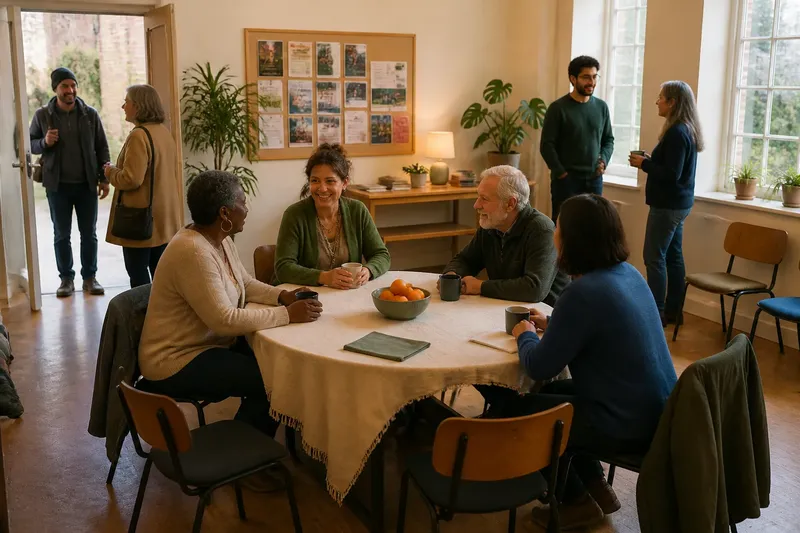
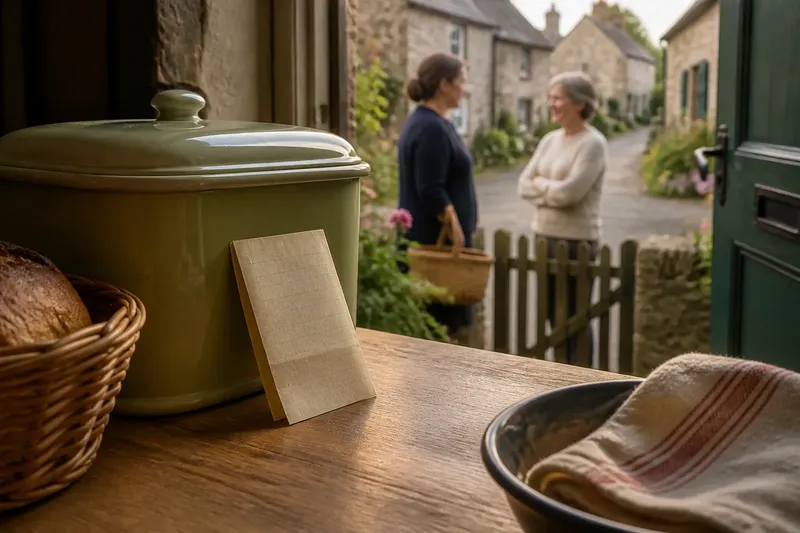
The Open Invitation Myth: Why an Invite Can Still Feel Hard to Join
An open invitation can still leave people unsure how to join. Make the time, welcome, roles and expectations clear so arriving feels easier.
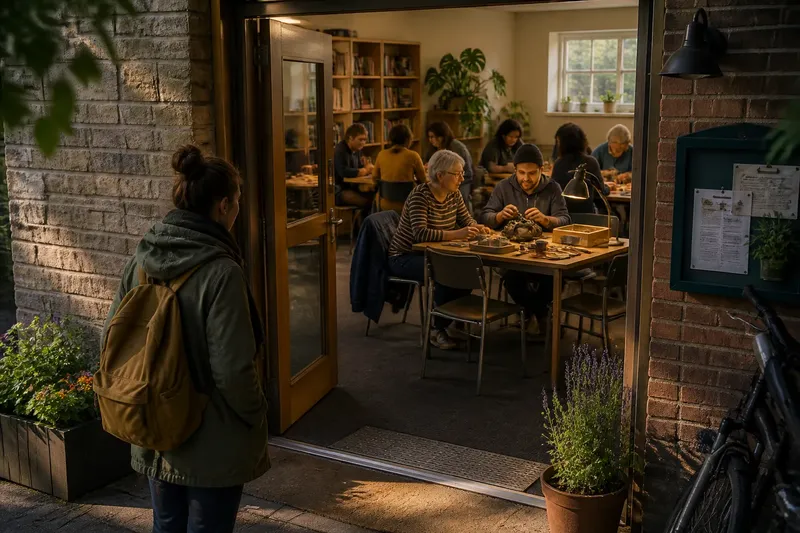
A notice on the community hall door says, “Everyone welcome”, but a newcomer pauses outside because it does not say which room to use or who will meet them. An open invitation can still feel hard to join when people have to guess what happens next. A few practical details help each person decide whether to come and how to take part.
What does an open invitation leave unsaid?
An open invitation offers attendance without requiring a personal introduction or special status. It does not automatically explain how to attend. People may want to know the gathering’s basic shape before deciding if it suits them.
Some questions are practical: where is the entrance, when does the event end, and can someone leave early? Others concern the social setting: will people sit in a circle, join a task or mainly chat? Organisers often know these answers so well that they do not realise a first-time visitor needs them.
Think of an invitation as a doorway. A welcoming sign helps, but a newcomer also needs to see where to go. There is no need to anticipate every preference; focus on removing avoidable uncertainty about the event’s rhythm and expectations.
How should an invitation explain the timing?
Give the start time, expected finish and a short description of what happens. “Come by on Thursday evening” may sound relaxed, but it leaves guests guessing whether they can arrive later or might interrupt an activity already under way.
If there is a main activity, say when it begins and what early arrivals can do. If people can arrive throughout a stated window, explain that plainly. Describe late arrival without making it a test of manners: “The singing starts after tea; come in quietly if you arrive later” gives guests a way to join without drawing attention to themselves.
Identify the place as clearly as the time. A community centre may have several doors, and the room beside the car park may not be in use. Name the entrance, room or recognisable landmark, and say whether there will be a sign.
Which social expectations should you explain?
Consider the first decisions a guest might face. Do they need to introduce themselves to the whole group? Is there a sign-in sheet? Can they watch before joining? A brief explanation can ease that first step without turning the invitation into a rulebook.
Describe activities whose format might not be obvious. At a mending circle, for instance, say whether guests should bring a garment, can simply observe, or will find materials provided. Make clear what is optional: people may prefer to listen, step out of a discussion or attend only part of the event.
Specific wording gives a clearer picture than a vague assurance. “We’ll begin with introductions, then work at separate tables; listening is fine, and you may leave early” tells a newcomer more than “Just pop in and see what happens.”
What should guests know about roles and contributions?
Some gatherings include tasks that guests may mistake for requirements. If bringing food, donating supplies, helping to tidy or contributing to a collection is optional, say so. If something is needed, name it and, where possible, explain how someone can attend without it.
A guest should not have to work out who is organising the event or interrupt a private conversation to ask where to sit. Name a host or welcome person, and explain how to find them. For example, say, “Ask for Mina at the library room door; she’ll be wearing a green name badge.” If the host may be occupied, add a simple backup, such as a sign directing visitors to the room.
For a recurring gathering, say whether people can attend once without committing to future dates. Keep any invitation to volunteer separate from the invitation to come. Newcomers should not be expected to explain their needs or suggest improvements before they can feel welcome.
How can a welcome account for different needs?
Access depends on more than the wording of an invitation. A guest may want to know whether there are steps, whether seating is available or whether the room is likely to be noisy. Share what you know in plain language, and name someone who can confirm details you have not checked.
Do not promise features that are uncertain. For venue access, equipment or local requirements, consult the venue’s guidance or an appropriate professional where needed. Food and drink can raise questions too: say whether refreshments will be provided, whether guests are expected to bring anything and whom they can ask about ingredients.
Avoid phrases such as “regulars know the drill” or “bring your usual”, which assume shared knowledge. Explain the detail instead: where to put a coat, how to join an activity and whether signing up is necessary.
How can you check that an open invitation is usable?
Read the invitation as if you had never visited the venue. For every item below, check the stated detail; if it is clear, keep it, and if it is missing, add the detail or name a person who can confirm it.
- Check whether the invitation names the building and the entrance; if both are clear, keep them, but if either is missing, add a room name or landmark.
- Check whether the start and finish are stated; if both are included, keep them, but if one is uncertain, ask the organiser and state what is known.
- Check whether late arrival and early departure are addressed; if either is allowed, explain how, but if the activity requires everyone to start together, say so plainly.
- Check whether the first activity is described; if a newcomer can tell how to join or observe, keep the wording, but if not, explain the first few minutes.
- Check whether a host or welcome person is named and recognisable; if visitors can find them, keep that route, but if not, add a name, role or backup sign.
- Check whether food, equipment, money or help is expected; if it is optional, label it optional, but if it is needed, state what and offer an alternative where possible.
- Check whether the invitation explains how to ask about access, children or the venue; if the contact person and route are clear, keep them, but if not, add a person or an appropriate contact method.
Imagine you are arranging a neighbourhood repair evening in a library room. Your draft reads, “Open to everyone; bring something to fix.” You check it against the list: it gives no entrance, timings, host or alternative for someone without an item. You revise it to name the library’s side entrance and the room, state the start and finish, say that visitors may watch and that basic tools are supplied, and name a welcome person at the door. The resulting invitation lets a newcomer decide whether to attend and know whom to look for, while someone with an item can still bring it.
What questions do people ask before joining?
Do I need to know someone already?
Say whether people may attend without an introduction, then name the host or welcome person who will greet them. If a particular event does require an invitation, explain that condition instead of describing it as open to everyone.
Can I arrive late or leave early?
State what works for the event and explain how late arrivals can join quietly if that is possible. If everyone needs to be present from the start, say so, so guests can make an informed choice.
Should I bring anything?
Name any genuinely useful item and distinguish it from optional contributions. If nothing is needed, say that too; silence can leave guests wondering whether they have missed an instruction.
Who can answer a question before I come?
Name a contact person and give a straightforward way to reach them, such as an email address or telephone number. Make clear that contacting them is optional, not another condition of attendance.
What is not worth the effort?
It is not worth trying to write an invitation that addresses every possible personal concern. A short notice overloaded with rules and reassurance can make a modest gathering sound complicated. Prioritise the details a newcomer needs to decide and arrive, then offer a contact route for more specific questions.
A warm tone cannot make unclear arrangements easier to follow. “We’re a friendly bunch” does not tell a visitor where to go or whether they need to bring anything. Describe the welcome through observable actions: someone will meet guests at the door, chairs are available, or watching is welcome.
After the gathering, note where guests paused or asked for help, without treating a quiet room as proof that nobody felt uncertain. If someone says the entrance was hard to find, make that detail clearer next time. An open invitation works better when its practical promises match what a newcomer encounters.
Clear timing, a named welcome person and optional ways to participate let people choose their own way in. For an open invitation, the useful test is simple: can a newcomer understand how to arrive, whom to look for and what they may do once inside?