Drop-In or Booked Slot: Choosing a Format for Group Help
Drop-in or booked slot formats shape how neighbours ask for practical help. Choose a rhythm that fits the task, protects privacy and keeps joining optional.
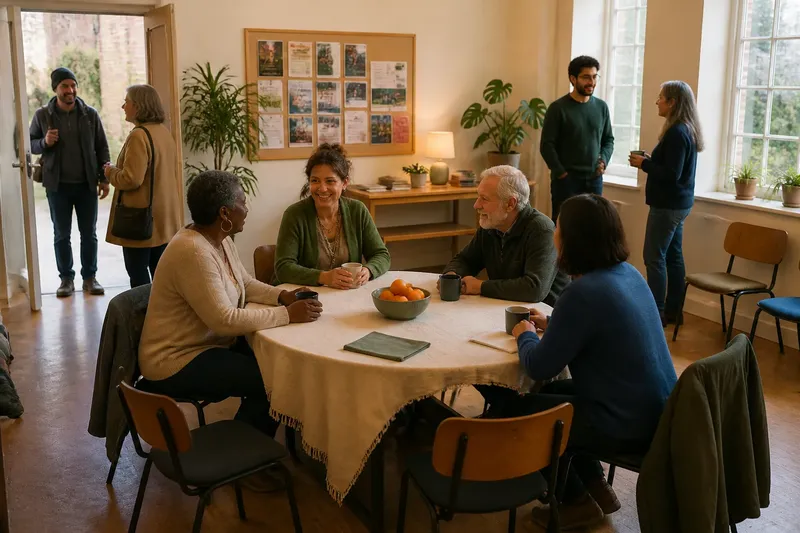
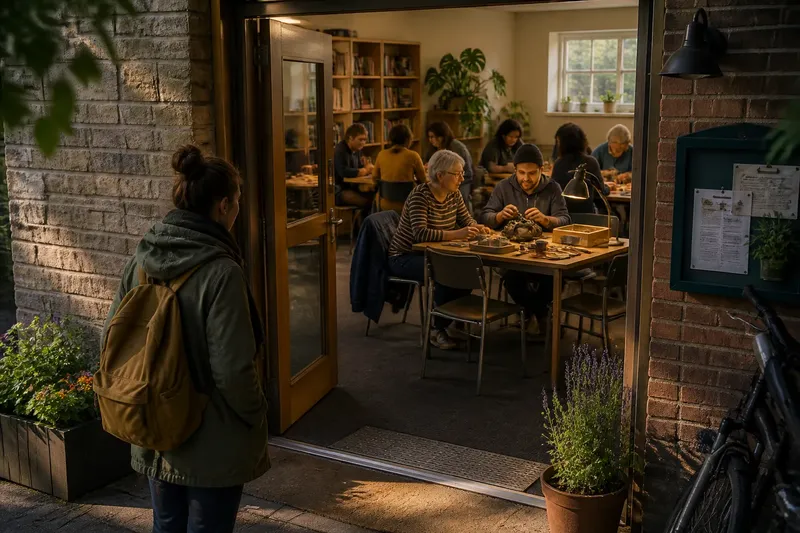
At the community hall, one neighbour arrives carrying a stiff jar lid; another has brought a form she would rather discuss privately. The first may need a few minutes of shared attention, while the second needs a quieter, predictable turn. Choosing between drop-in or booked slot formats helps a group match its welcome to the kind of practical help people are seeking.
Neither format is inherently friendlier. Open arrival allows people to come when they can, and scheduled turns make time and attention easier to allocate. The useful question is what the task asks of the person seeking help, and what the people offering it can reasonably provide.
What is the difference between drop-in and booked-slot help?
A drop-in session has a stated period during which people may arrive without reserving a time. They might wait, join a shared activity or speak with whoever is available. A booked-slot session assigns each person a particular turn, usually arranged beforehand.
These formats create different kinds of structure. Drop-in help structures the room and its opening hours; a booking structures the order of individual conversations. A group can also combine them, for example by keeping most of a session open while setting aside a small number of appointments for tasks that need privacy.
It helps to say clearly what the group means by “drop in”. Some gatherings welcome people at any point; others ask them to arrive near the start so nobody misses a shared explanation. Likewise, “booked slot” should make clear whether a reservation is essential or simply offered to help with planning.
When does drop-in work better for practical help?
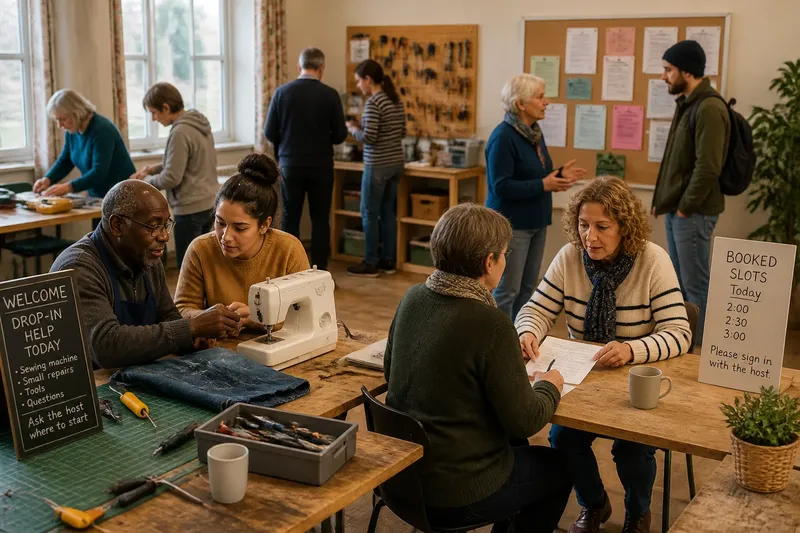
Open arrival suits tasks that can be picked up at different points, handled briefly, or explained while other people are present. Examples include help using a sewing machine, mending a loose button, sorting donated tools, or learning how to label household recycling. A person can often watch first, ask a small question, then decide whether to try the task.
It can also help when visitors do not know in advance what to ask. Someone might arrive with a household object, a confusing letter or an unfinished craft and work out the question through conversation. There is no need to describe the issue on a booking form before deciding whether the group is the right place.
The trade-off is uncertainty. People may wait, a volunteer may be occupied, and a complicated request can absorb attention that others expected to share. A simple sign-in sheet, a visible list of available helpers, or a host who explains the queue can make the arrangement easier to understand without turning it into an appointment system.
When are booked turns the kinder choice?
Scheduled turns are useful when the help needs sustained attention, preparation or a degree of privacy. A neighbour might need someone to read through a long council letter, practise a conversation about a tenancy concern, or learn a computer task that requires focusing on one screen. Knowing that a helper will be available at a particular time can reduce the strain of waiting in a busy room.
Bookings can also make a small volunteer team easier to share. A group can offer a limited number of turns, match a request to someone with suitable knowledge, and leave time between conversations. This is not the same as promising an outcome: it is a way to organise attention and set a clear boundary around what the gathering can offer.
The cost is the extra effort of arranging a time. A person may not know what help they need until they arrive, may find forms awkward, or may be unable to commit because of caring duties or changing work. Keep the booking route simple, and consider allowing a supporter or organiser to reserve a turn on someone’s behalf, with their consent.
How can a group decide which format fits?
Start with the shape of the request rather than a general preference for openness or order. Ask whether people can make progress while others are nearby, whether the issue is sensitive, and whether a helper needs time to prepare. Then consider how many suitable helpers will be present and what happens if several people need help at once.
- Choose open arrival when requests are short, varied or easy to observe and the group can manage a shared queue.
- Choose booked turns when each request needs focused attention, preparation or a confidential conversation.
- Offer both when a session includes simple walk-up questions as well as longer conversations.
- Use a referral or signposting route when the request falls outside the group’s knowledge or remit, rather than implying volunteers can handle everything.
- Review the arrangement by asking attendees and helpers what felt difficult: waiting, explaining the request, finding a suitable person or keeping a conversation private.
Say you are organising a neighbourhood repair afternoon and expect a mix of small fixes and questions about a sewing machine. You could leave the machine demonstration open to anyone who arrives, then offer a few reserved turns for repairs that need someone to examine an item closely. People could still attend without an appointment, while a notice explains that complex repairs may require another visit or referral. The observable aim is that visitors can tell where to start and what kind of attention is available.
Do not spend effort making the booking process elaborate. A complicated form, multiple reminder messages and a detailed intake interview can feel disproportionate for a modest local gathering. A clear time, a name or simple contact route, and a short note about the request are often enough for organisers to prepare sensibly.
How can a format stay voluntary rather than compulsory?
Make the choice visible before anyone arrives. A notice can state whether people may turn up, whether appointments are optional, and what to expect if the room is busy. If both routes exist, explain that a booking reserves a conversation, not special standing or a better welcome.
At the gathering, let people decide how much to share. A visitor can ask a general question first, watch for a while, or leave without explaining why. For sensitive matters, offer a quieter corner only if the person wants it, and avoid inviting them to describe personal details in front of the group.
Keep boundaries equally clear. A volunteer can explain what they know, help someone find a relevant service, or arrange another conversation; they need not take responsibility for a problem beyond their role. If the issue involves legal, financial, health or safety decisions, general neighbourly support is not a substitute for advice from a suitably qualified professional.
Which format should I use for an uncertain request?
Can someone arrive without knowing exactly what they need?
Yes, if the group welcomes drop-ins and has a host who can help identify a sensible starting point. A brief first conversation may show whether the request suits the gathering or needs a different kind of support.
Should every visitor book a turn?
Not necessarily. Requiring appointments can make sense for a service built around private, focused conversations, but it can exclude people whose questions are still taking shape.
What if a drop-in session becomes crowded?
Explain the order in which people will be seen and give a realistic sense of whether a helper is available. If the group cannot meet everyone’s needs that day, offer a clear next step without implying that attendance entitles anyone to a particular result.
Can someone book and still bring another person?
Often they can, but it is considerate to ask beforehand if the conversation may involve private information or limited space. The visitor should remain in control of who hears their request.
What should the invitation tell people?
A useful invitation names the sort of help on offer, the arrival window or booking route, and any limits a visitor needs to know. It should also identify a contact person for access questions and explain whether people can come simply to observe. Avoid promising that every request can be resolved; describe the help the group is prepared to offer.
For a gathering based on drop-in or booked slot arrangements, the best format is the one people can understand and use without feeling pressed to attend, disclose more than they wish, or accept help they did not ask for. A brief check-in after each session can show whether the rhythm suits both visitors and volunteers, and whether the next gathering needs more open time, clearer booking information or a quieter place to talk.