A Swap Table for Seeds, Stories and Garden Notes
Plan a seasonal garden swap table for seeds and notes, with simple prompts so neighbours can contribute comfortably even if they arrive empty-handed.
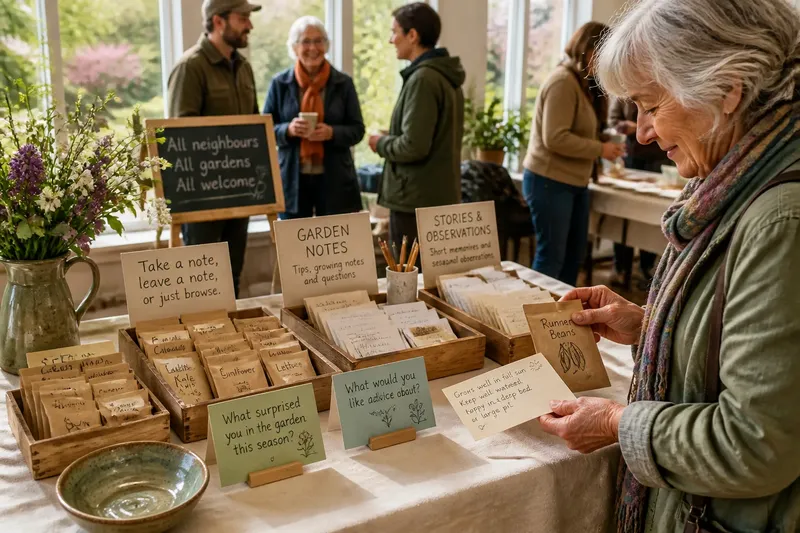
A paper envelope of runner bean seeds lands beside a handwritten note about a sunny windowsill, and a neighbour who came only to browse finds something to take home. A swap table for seeds, stories and garden notes can work just as well for people with full pockets as for those arriving empty-handed. The useful decision is not how much to collect, but what kind of exchange suits the season and the neighbours who may come.
What should the table exchange?
Keep the invitation broad enough to include different kinds of gardeners, but clear enough that people know what belongs. Seeds, short growing notes and small stories all fit; bulky tools, pots and plants need more space and care, so include them only if the venue can accommodate them.
Garden notes can be as useful as seeds. Someone might bring a brief account of what grew well in a shaded corner, how they kept labels readable in rain, or which flowers attracted bees to a balcony. These are observations to share, not promises that the same result will follow elsewhere.
- Seeds: Invite clearly labelled, dry seeds that the giver can identify. A small envelope is easier to browse than a loose handful.
- Growing notes: Offer blank slips for brief tips, such as planting conditions, watering habits or a problem that took some figuring out.
- Garden stories: Ask for a short memory or seasonal observation, not a polished piece of writing.
- Empty-handed contributions: Make conversation, questions and help sorting notes legitimate ways to take part.
For seed handling, follow the packet or supplier’s guidance and any local rules that apply to the seed’s origin or distribution. Avoid inviting unidentified seed, since uncertainty about what it is can make sharing less useful.
Which seasonal plan fits your neighbours?
A seasonal exchange should follow what people can reasonably offer, rather than impose a gardening calendar. A spring gathering may centre on sowing ideas; a summer one might collect notes on watering and shade; an autumn table can make room for saved seeds and reflections on what to try next. In winter, stories, plans and seed catalogues can keep the exchange alive without expecting fresh harvests.
If many neighbours are new to gardening, favour notes and questions over a seed-heavy event. A few sample prompts can give people somewhere to begin, while a simple “What would you like to grow?” card lets visitors name an interest without needing supplies.
If several people already save seeds, make labelling and browsing central. Set out envelopes, pencils and a tray for labelled packets, and leave room for a note about where the seed came from. This suits a group with material to exchange and helps newcomers understand what is on offer.
If attendance is likely to be mixed or unpredictable, use a flexible table rather than assigning everyone a contribution. A person can leave a note, take one, ask a question or simply read. This is the best fit when the gathering is part of a wider neighbourhood event and people may only stop briefly.
If the group is small and already knows one another, centre the exchange on stories and specific observations. People can explain the setting behind a note—such as a windy balcony or a narrow strip by a fence—so others can judge whether it is relevant to their own patch.
How can people join without bringing anything?
Put the permission where visitors can see it: “Take a note, leave a note, or just browse.” Then offer small ways to contribute on the spot. A prompt card can ask, “What surprised you in the garden this season?” or “What would you like advice about?” A visitor can answer in a sentence, dictate a thought to a volunteer, or leave the card blank.
Say you are hosting in a community hall and expect a mix of keen growers and curious passers-by. You could place seed envelopes at one end, blank garden-note slips in the middle and two prompts at the other. A neighbour without seeds might write that a north-facing windowsill stays cool, then browse a note from someone with a similar space; the expected result is an exchange of useful context without requiring a prepared donation.
Keep the invitation free of social tests. People need not explain why they have nothing to swap, promise to return with something, or speak to the whole group. A volunteer can greet visitors with a neutral offer—“Would you like to browse or write a note?”—and leave the choice with them.
What should the table say about seeds and notes?
Use simple labels that answer practical questions: “Seed name”, “Where it grew”, “Growing conditions” and “Notes from the giver”. Leave space for uncertainty rather than encouraging confident guesses. If a person does not know a plant’s variety, the packet can say “unknown” or remain off the seed tray.
Garden notes benefit from context, but not from long forms. A few lines about sun, soil or container type help readers decide whether a tip may suit their own garden. Avoid turning the table into a competition for the most impressive harvest; ordinary observations are often easier to adapt.
Keep the materials modest: envelopes, paper slips, pencils, a few shallow trays and a visible sign are usually enough for a small gathering. What is not worth the effort is elaborate decoration or a detailed record of every packet. Those tasks can distract from browsing and make hosting feel like administration.
Which questions help you choose a format?
Should a seed swap require a contribution?
No. A no-entry requirement makes the table easier to join for new gardeners, passers-by and anyone whose garden did not produce seeds. Offer ways to contribute through a note, question or conversation instead.
What should a garden note include?
A useful note names the plant or task, gives a little context and describes what the writer observed. A line about a container’s exposure or a patch’s shade is more helpful than a bare instruction with no setting.
How can a host make the exchange manageable?
Choose a clear focus for the season, provide labelled sections and ask one or two neighbours to help welcome visitors or tidy the table. Keep the format small enough that people can understand it at a glance.
What if few people bring seeds?
Let the gathering proceed as a garden-notes exchange rather than treating low seed numbers as a failure. Prompts, local observations and questions can still give neighbours something worthwhile to share.
How should the exchange change with the season?
At each gathering, change the prompt to match what people are noticing. Ask about sowing plans before spring, shade and watering during warmer weather, and seed saving or lessons learned as the growing season winds down. In colder months, invite plans for a future patch or memories of a plant that mattered to someone.
Afterwards, keep only the notes that people have chosen to leave for others, and ask permission before displaying anything that identifies its writer. A small folder organised by subject—containers, shade, herbs or seed saving—can make useful advice easier to find at the next gathering without turning the table into a permanent archive.
A well-planned swap table for seeds, stories and garden notes gives each neighbour a choice: bring something, leave a small observation, ask a question or browse quietly. Match the format to the season and the people likely to arrive, and the exchange can feel generous without asking anyone to perform expertise or arrive with a full bag.